

The Ìýis a groundbreaking effort to encourage communities to read together, centering African American books and authors.ÌýIt was established in 1990 by the Black Caucus of the Â¥·ïÌìÌà Council of Teachers of English to make literacy a significant part of Black History Month. This initiative has reached more than 6 million participants around the world.
While much of the focus of the African American Read-In are novels and trade books, let’s kick off this month looking at .
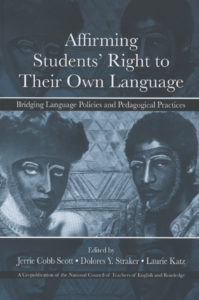 Confronting educational inequality, the Â¥·ïÌìÌà Council of Teachers of English proposed the “â€� (SRTOL) Act in 1974. This resolution begins: “We affirm the students’ right to their own patterns and varieties of language – the dialects of their nurture or whatever dialects in which they find their own identity and style . . . â€� (p. 9). This resolution was reaffirmed in 2003 due to its contemporary relevance. As an anniversary publication, is devoted to examining the results of the resolution, to strengthening the connection between pedagogy and policy, and to drawing attention to language ideologies.
Ìýapproaches the issue of African American Vernacular English (AAVE) in terms of teacher knowledge and prevailing attitudes, and it attempts to change current pedagogical approaches with a highly readable combination of traditional academic discourse and personal narratives. Read more in this review of “Ìýfor US English Composition.”
includes more than 1,600 references on education in relation to African American Vernacular English (AAVE), English-based pidgins and creoles, Latina/o English, Native American English, and other English vernaculars.ÌýRead a from Teachers College Record.
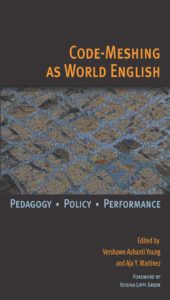 A collected volume of original essays, , presents code meshing (blending dialects and languages with standard English) as the better pedagogical alternative to code switching (shifting between dialects or languages in different settings) in teaching literacy to diverse learners.ÌýIn , editor Vershawn Ashanti Young discusses and defines code-meshing.
Come back next week as we continue to look at Â¥·ïÌìÌà texts during the African American Read-In.